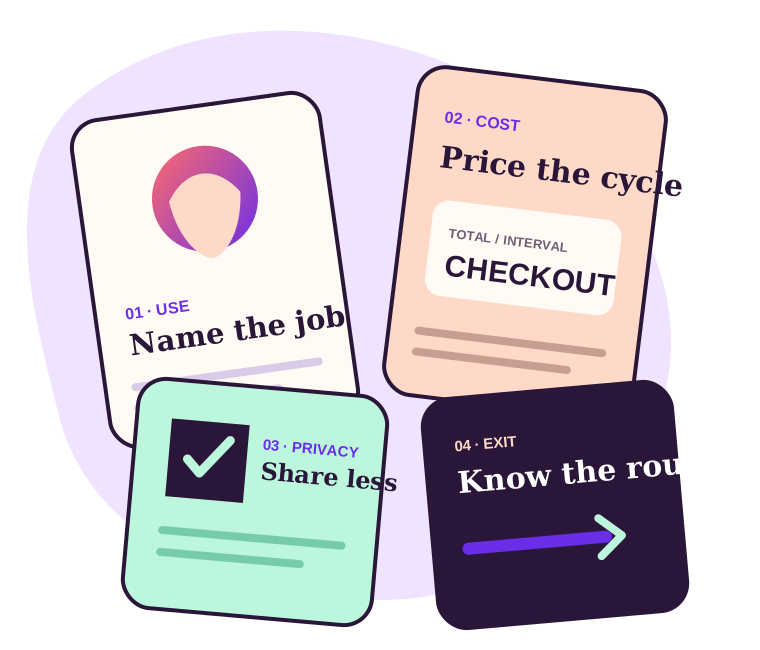
What will one complete billing cycle cost today?
Read interval, renewal, currency and included usage before you subscribe.
Begin with the page the operator controls.
Product details, availability and prices can change. Read the current source before you run the check, then use the live account or checkout screen when it provides more specific information.
Official Kupid AI subscriptionshttps://www.kupid.ai/subscriptions ↗Source checked for this publication on July 31, 2026. That date records our review, not a promise that the page will remain unchanged.
Run a small test you can repeat.
- 1
Open the official subscription page in your region.
- 2
Compare the checkout total with the headline offer.
- 3
Set a calendar reminder before the stated renewal date.
Keep the profile fictional, adult and free of identifying information. Write down what happened instead of filling gaps with assumptions. If the result matters to billing, privacy or your ability to leave, confirm it on the current official screen.
Finish with a compact evidence note: the question you asked, the source URL and date, the account or device used, what you observed, and what remains unknown. Save price and policy screens when they affect the decision. This record makes a later comparison fair and prevents a memorable answer from replacing the full result.
A result can look stronger than it is.
A percentage discount is not the same as a low total cost.
Promotional examples show what a product is designed to do; they do not establish what every user, character, plan or device will deliver. Separate what the operator states from what you personally observe.
Pause if the cost, consent, privacy rule or account control is unclear. Ask official support rather than making an irreversible guess.
A deeper, reproducible decision process
Kupid AI pricing is best evaluated as a full-cycle cost, not a single headline amount. The worksheet below is designed for a live checkout audit. Prices and promotions can change, so verify every number in your own currency and treat the final checkout and current terms as controlling evidence.
Build a dated checkout record
Open the current subscription surface and write down the observation date, displayed currency, plan name, billing interval, amount due now, renewal amount, and whether tax is included or calculated later. Continue only far enough to see the final total; do not complete a purchase merely for research. If a promotion appears, distinguish the introductory period from the recurring period. A percentage badge is not enough evidence because the reference price, duration, and eligibility can vary.
Capture which features and allowances are explicitly attached to the selected plan. Use the wording shown to your account rather than an old screenshot or an affiliate summary. Mark ambiguous benefits as unknown. “Premium access,” for example, is not a usable budget line until you know which parts of your intended routine are included and which still consume coins. Store the record with the date so a later change does not make the comparison look more certain than it was.
Separate subscription cost from usage cost
Create two columns: recurring subscription and variable use. The first contains the plan charge and predictable tax. The second contains coins or other add-ons needed for the activities you actually expect to repeat. Do not count a one-time free balance as a monthly allowance unless the current product says it renews. Likewise, do not assume an “unlimited” label covers every media tool; verify the scope and any fair-use or account limits in the current interface and terms.
Estimate low, normal, and heavy weeks. A text-first buyer may use few variable features, while a media-first buyer can consume optional value quickly. Record the units used in one careful sample session, but do not project from an accidental click or an unusually long first visit. Multiply the normal weekly pattern across the billing cycle and add a buffer only if you can explain it. The useful result is a range with assumptions, not a fake precise monthly price.
Convert coins into outcomes
Coins are easy to misunderstand when they remain an abstract balance. Translate them into the outcome that matters: approximate conversations, image attempts, voice interactions, or another current in-product action. Verify the deduction shown before and after a low-risk test, because labels and costs can vary by feature or change over time. Do not present a coin conversion as permanent unless the service publishes a stable rule and the interface confirms it.
Track unsuccessful attempts as part of cost. If a media result requires retries, the practical cost of one usable result can be higher than the listed cost of one generation. Also record whether unused coins expire, carry over, or depend on an active subscription; consult the current terms and support when the answer is unclear. This turns the budget from “How many coins do I get?” into “How much of my intended routine can this purchase reliably support?”
Compare intervals on equal time horizons
Monthly and longer plans cannot be compared by looking only at the displayed per-month equivalent. Put every option on the same horizon and record the amount actually charged today. A long plan may reduce the effective monthly amount but increases commitment and product-change risk. A short plan can cost more per month while limiting the damage if the experience, policies, or usage pattern do not match expectations.
Choose the shortest interval that can answer the decision question unless you already have repeat-use evidence. Before accepting a longer term, ask whether the discount compensates for the loss of flexibility and whether the plan’s included value is likely to remain useful. Do not annualize a temporary trial as if it were the renewal price. The calculation should preserve the initial charge, later charge, interval, and cancellation deadline as separate facts.
Budget renewal, cancellation and refund uncertainty
Read the terms before purchase and locate subscription management in the account interface. Record the cancellation method, notice timing, effect on remaining access, and any explicit refund conditions. Cancellation and refund are different questions: stopping a future renewal does not necessarily reverse the current charge. If the wording is unclear, ask support before buying and keep the answer with the checkout record.
Set two reminders: one early enough to evaluate actual use and another before the renewal deadline. Keep the confirmation message and a redacted receipt. If you cancel, save the confirmation and verify that the account no longer shows an upcoming renewal. These steps are not evidence that every request will succeed; they are a practical way to document what you agreed to and reduce avoidable disputes.
Apply a value threshold instead of chasing the cheapest plan
Define the maximum full-cycle spend you are comfortable losing if the service disappoints. Then define the minimum outcomes needed to justify that spend, such as a certain number of useful sessions or media results. Divide the projected full-cycle cost by those outcomes to produce a cost-per-use range. This is more decision-useful than declaring a plan cheap or expensive without knowing the buyer’s routine.
Buy only if the normal scenario stays below the ceiling, the checkout terms are clear, and an unresolved privacy or cancellation question is not a hard stop. Recalculate after the first week using actual use rather than optimism. If variable spend grows faster than value, reduce the routine, choose a different plan, or leave. The goal of this pricing guide is not to push an upgrade; it is to prevent a small headline price from hiding an unsuitable total commitment.
Keep the result auditable
Keep the completed worksheet beside the receipt and revisit it after the first week. Replace projected sessions, coin use and retries with observed values, but preserve the original assumptions so the comparison remains honest. If the effective cost moves outside the preset range, do not solve the mismatch by buying a larger package automatically. First identify whether the variance came from novelty, unclear unit costs, failed outputs or a routine that was unrealistic. A useful pricing decision is allowed to change when real use contradicts the pre-purchase model.
Sources to open during the check
Source list reviewed July 31, 2026. Live interfaces and checkout details can vary; record the date and account context of your own observation.
Turn the evidence into a boundary.
Treat the live checkout screen as controlling and pause if the renewal terms are unclear.
A useful choice does not require perfect certainty. It does require a clear main use, an affordable full billing cycle, acceptable handling of your information and a known exit route. Unknowns that affect those four areas should reduce confidence, not disappear from the score.
Ready to check the current Kupid AI experience?
We may earn a commission if you join. It does not increase your price.