Does Kupid AI fit the way you actually want to use an AI companion?
A practical decision path for adults who want to check fit before paying.
Begin with the page the operator controls.
Product details, availability and prices can change. Read the current source before you run the check, then use the live account or checkout screen when it provides more specific information.
Official Kupid AI overviewhttps://www.kupid.ai/ ↗Source checked for this publication on July 31, 2026. That date records our review, not a promise that the page will remain unchanged.
Run a small test you can repeat.
- 1
Write three realistic conversation tasks before signup.
- 2
Use a fictional adult profile and run the same tasks in two sessions.
- 3
Record what is available before payment and what requires an upgrade.
Keep the profile fictional, adult and free of identifying information. Write down what happened instead of filling gaps with assumptions. If the result matters to billing, privacy or your ability to leave, confirm it on the current official screen.
Finish with a compact evidence note: the question you asked, the source URL and date, the account or device used, what you observed, and what remains unknown. Save price and policy screens when they affect the decision. This record makes a later comparison fair and prevents a memorable answer from replacing the full result.
A result can look stronger than it is.
Do not turn a polished first exchange into a long-term quality claim.
Promotional examples show what a product is designed to do; they do not establish what every user, character, plan or device will deliver. Separate what the operator states from what you personally observe.
Pause if the cost, consent, privacy rule or account control is unclear. Ask official support rather than making an irreversible guess.
A deeper, reproducible decision process
This extended section turns the short Kupid AI overview into a reproducible buyer audit. It is a documentation and live-interface review, not a claim that we purchased every tier or used the service for months. Use the steps below to create your own dated evidence before paying.
Define the job before judging the app
A useful Kupid AI review begins with a job statement, not a feature list. Write one sentence describing the routine you want: brief evening conversation, recurring character roleplay, occasional image creation, or a more media-heavy companion. Then separate must-haves from novelty. If consistent text conversation is the job, an attractive image tool should not compensate for weak continuity. If visual creation is the job, message quantity alone is not the right measure. This prevents a polished first screen from deciding the verdict before the product has answered the buyer’s actual question.
Turn that statement into three measurable outcomes. Examples include whether a character keeps the same tone across a return visit, whether boundaries remain easy to restate, and whether the expected weekly routine fits inside the current plan and coin rules. Record unresolved items separately instead of converting missing evidence into either praise or criticism. A review is trustworthy when it shows what was checked, what remains unknown, and which source would resolve the uncertainty.
Run a controlled conversation sequence
Use the same neutral fictional sequence whenever you compare Kupid with another companion. Start with a simple character preference, introduce one harmless detail that should matter later, change the scene once, and return to the earlier detail after a break. Note whether the service follows the change, contradicts the established setup, or needs a reminder. Do not paste private facts, real names, workplace details, identifying images, or other material you would regret exposing. The goal is to test steering and continuity without turning the audit into a privacy risk.
Repeat the sequence on two separate sessions rather than relying on one unusually good or bad reply. Capture only low-risk notes: date, device, access level, approximate session length, observed friction, and whether the behavior was repeatable. Do not publish intimate transcripts or infer a permanent memory guarantee from a single callback. If the interface or plan changes during the test, label the two observations separately. That distinction matters because AI companion behavior and entitlements can change faster than an evergreen review page.
Evaluate creation and media without rewarding novelty
For character creation, measure how clearly the available controls map to the result you want. Record which appearance, personality, voice, and scenario controls are actually visible on the current interface, then check whether the final character reflects the choices. Treat promotional language and search snippets as discovery clues only. The controlling evidence is the live product surface available to your account on the day of evaluation. If a control varies by account, plan, location, or character, say that rather than presenting it as universal.
For images or voice, compare usefulness with the coin or plan cost required to repeat the result. One appealing output does not establish consistency. Use a small set of non-identifying fictional prompts, note failed or repeated generations, and stop before spending becomes automatic. Check whether media can be deleted, downloaded, hidden, or separated from the public-facing parts of the account. A feature earns value only when the result is repeatable enough for the intended routine and the buyer understands the cost and privacy trade-off.
Read the commercial agreement, not just the price card
Before subscribing, open the current subscription page and final checkout in the same session. Record currency, billing interval, renewal wording, taxes if shown, included allowances, coin treatment, and the exact cancellation path described at that moment. Promotions can change, so this page deliberately avoids turning a temporary price into a permanent promise. Save your own dated screenshot or receipt for support purposes, but redact payment details before storing or sharing it.
Then read the current terms for renewal, account restrictions, refund language, and termination rules. A low headline price can still be poor value if the desired routine relies on additional coins or a feature outside the selected plan. Conversely, a higher plan is not automatically wasteful if it replaces predictable add-on purchases. Build the verdict from the full-cycle cost of your planned use, not from the smallest number printed near the subscribe button.
Use privacy questions as release gates
Read the current privacy policy for data categories, processing purposes, sharing, retention, security language, and account rights. Translate each section into a personal rule. Use a unique email, a unique password, fictional profile details where permitted, and the minimum information needed to evaluate the service. Do not assume that “private chat” means end-to-end encryption, zero human access, or immediate deletion unless the current policy states those properties clearly and you can verify the relevant controls.
Test the account exit before the sunk-cost effect appears. Locate support, subscription management, deletion instructions, and any content-management controls while the account is still accessible. If an important answer is missing, treat it as unresolved and ask support before sharing sensitive material or buying a long interval. The safe verdict is not a universal “safe” label; it is a list of risks you reduced, risks you accept, and questions still unanswered.
Write a verdict that can survive a product change
Score Kupid against the three outcomes defined at the start. Give each outcome a pass, partial, fail, or unknown result and attach the observation that supports it. Keep interface quality, conversation fit, media fit, cost predictability, and privacy documentation separate. An average score can hide a hard failure: a beautiful interface is irrelevant if the buyer cannot verify cancellation, while strong chat may still be the wrong choice for someone focused on visual generation.
Finish with a smallest-next-step decision. That may be leave, continue unpaid, buy the shortest suitable interval, or compare one alternative using the exact same protocol. Set a review date before renewal and keep the evidence dated. This approach does not guarantee that another user will get the same output, but it creates a transparent reason for the recommendation and makes future updates easier when plans, policies, or features change.
Sources to open during the check
Source list reviewed July 31, 2026. Live interfaces and checkout details can vary; record the date and account context of your own observation.
Turn the evidence into a boundary.
Choose it only when the current experience, price screen and exit controls all fit your own boundary.
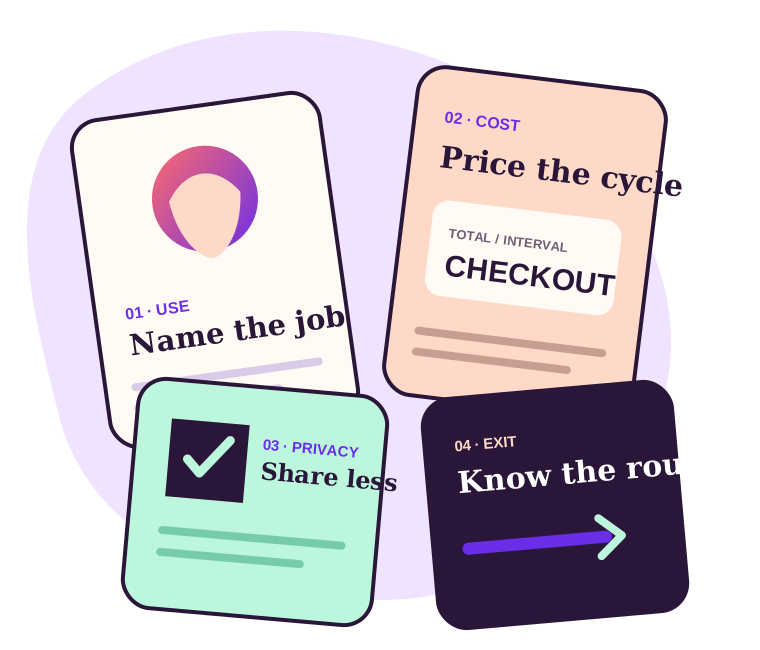
A useful choice does not require perfect certainty. It does require a clear main use, an affordable full billing cycle, acceptable handling of your information and a known exit route. Unknowns that affect those four areas should reduce confidence, not disappear from the score.
Ready to check the current Kupid AI experience?
We may earn a commission if you join. It does not increase your price.