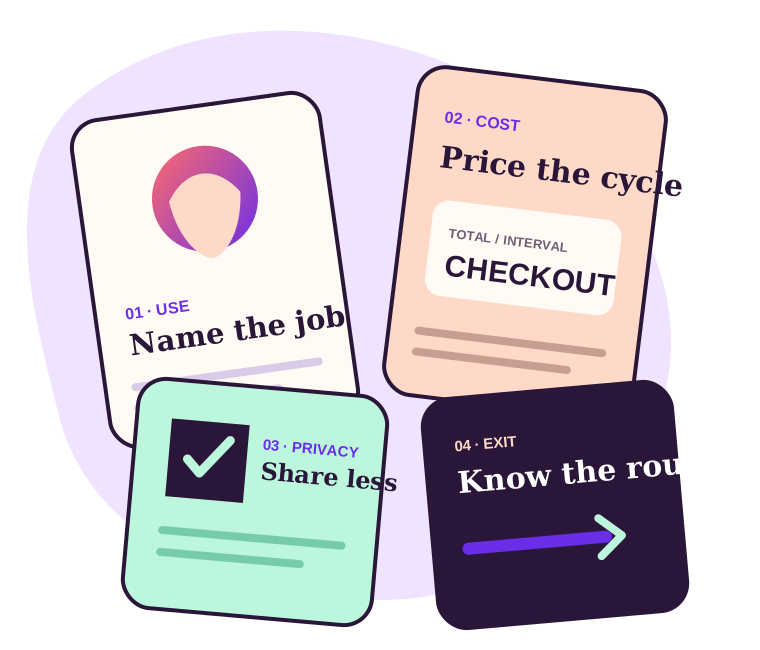
Does the service solve your main use case often enough to justify the real cost?
Turn features, time and full-cycle cost into a simple go-or-stop decision.
Begin with the page the operator controls.
Product details, availability and prices can change. Read the current source before you run the check, then use the live account or checkout screen when it provides more specific information.
Official Kupid AI subscriptionshttps://www.kupid.ai/subscriptions ↗Source checked for this publication on July 31, 2026. That date records our review, not a promise that the page will remain unchanged.
Run a small test you can repeat.
- 1
Name one primary use case.
- 2
Estimate realistic sessions, not an idealized maximum.
- 3
Subtract points for unresolved privacy, limit or cancellation questions.
Keep the profile fictional, adult and free of identifying information. Write down what happened instead of filling gaps with assumptions. If the result matters to billing, privacy or your ability to leave, confirm it on the current official screen.
Finish with a compact evidence note: the question you asked, the source URL and date, the account or device used, what you observed, and what remains unknown. Save price and policy screens when they affect the decision. This record makes a later comparison fair and prevents a memorable answer from replacing the full result.
A result can look stronger than it is.
A discount can create urgency without improving personal value.
Promotional examples show what a product is designed to do; they do not establish what every user, character, plan or device will deliver. Separate what the operator states from what you personally observe.
Pause if the cost, consent, privacy rule or account control is unclear. Ask official support rather than making an irreversible guess.
A deeper, reproducible decision process
“Worth it” is not a permanent property of Kupid AI. It is the relationship between your intended routine, verified full-cycle cost, repeatable outcomes, privacy comfort and ability to leave. This workbook helps reach a dated personal verdict without inventing long-term testing.
Define value in observable terms
List the three outcomes that would make the service useful over one billing cycle. Examples include a certain number of satisfying text sessions, a repeatable character setup, or a limited number of acceptable media outputs. Avoid vague goals such as “good AI” or “realistic companion.” For each outcome, define what would count as success, partial success, failure, or unknown. Then set a maximum full-cycle spend and a maximum amount of personal data you are willing to provide.
Add deal-breakers before opening the checkout. These may include unclear renewal terms, an unavailable cancellation path, a required feature outside the budget, or discomfort with a privacy-policy section. A deal-breaker should not disappear because another feature is entertaining. This creates a verdict that reflects the buyer rather than an average feature score designed to make every product look acceptable.
Use unpaid access as a filter, not proof of paid value
If unpaid access is available to your account, use it to inspect navigation, basic character fit, documentation, and the location of account controls. Record what is actually accessible and what remains locked. Do not assume the unpaid allowance repeats, predicts the paid experience, or includes every promoted capability. Access can vary by time, location, account, or promotion.
Run a small fictional interaction sequence and stop when the free path has answered its limited question. The goal is to reject obvious mismatch before payment, not to extract maximum use. If a must-have cannot be tested without purchase, mark it unknown and decide whether the shortest plan is an acceptable paid experiment. Never label an unknown feature excellent because the product page describes it attractively.
Design a bounded first-week test
If the checkout, terms and privacy review pass, write a seven-day protocol before buying. Schedule two or three short sessions rather than one binge. Use the same fictional character and record steering, continuity, correction, and whether the desired routine remains enjoyable after novelty fades. For media, use a fixed small brief and spending cap. Avoid private identities, identifying images, and personal secrets.
At the end of each session, note useful outcome, friction, variable units consumed, and unresolved questions. Do not score emotional intensity or anthropomorphic claims as evidence that the system understands or cares. Evaluate the product as software supporting a fictional experience. If a boundary, cost, or privacy concern appears, pause instead of spending more to rescue the experiment.
Calculate cost per useful outcome
Build the cost from the live checkout: amount due now, renewal amount, interval, tax if shown, included allowance, and expected variable purchases. Convert the observed week into low, normal, and heavy full-cycle estimates. Include failed media attempts when they consume value. Keep promotional and recurring periods separate. The final range should show assumptions so another reader can understand why their result may differ.
Divide the normal full-cycle estimate by useful sessions or accepted outputs. Compare that amount with the entertainment or tool budget you already use, not with an arbitrary universal threshold. A service can be worth a modest amount for frequent text use and poor value for occasional media use—or the reverse. The relevant number is the cost of the outcome you actually repeat.
Check privacy, renewal and exit before sunk cost grows
Read the current privacy policy and terms before entering sensitive material. Translate collection, processing, sharing, retention, and rights language into rules for your account. Use unique credentials and minimal fictional details where allowed. Do not infer end-to-end encryption, guaranteed deletion, or zero review from general words such as secure or private. Important missing answers should remain unresolved until support clarifies them.
Locate subscription management, support, account deletion instructions, and content controls during the first session. Set reminders before renewal and preserve a redacted receipt and cancellation confirmation. If leaving is confusing, that is part of the value verdict even when the product experience is enjoyable. Good value includes the ability to understand the agreement and stop future charges without guesswork.
Make the verdict and define the stop rule
At the checkpoint, score each promised outcome pass, partial, fail, or unknown. Compare actual full-cycle projection with the preset ceiling. Check every deal-breaker separately and do not hide it inside an average. The service is worth continuing only when the important outcomes are repeatable enough, the cost is acceptable, the policy posture fits your comfort, and the exit remains clear.
Write a stop rule for the next period: cancel if use falls below a defined number, if variable spend exceeds the ceiling, if a must-have becomes unreliable, or if a material policy or account-control change is unacceptable. Schedule the review before renewal. A careful “worth it for this routine at this date” verdict is more honest and more useful than a permanent yes/no label, and it remains valid without pretending that every user receives the same behavior.
Keep the result auditable
Keep a one-page decision record with the chosen plan, charge and renewal date, the intended weekly routine, observed variable use, pass or fail results, unresolved policy questions and the next review date. The record should be understandable without reopening this article. If the service remains useful, the note explains why continuing fits the preset boundary. If it does not, it provides the evidence needed to cancel before another cycle rather than rationalizing the original purchase. Revisit the verdict when price, allowances, the most-used feature, privacy language or account controls materially change. Do not turn continued use into proof that the product is universally good, and do not turn one disappointing session into proof that it is universally bad. The disciplined outcome is narrower: worth continuing, worth a shorter test, or not worth the current commitment for this specific routine and date.
Sources to open during the check
Source list reviewed July 31, 2026. Live interfaces and checkout details can vary; record the date and account context of your own observation.
Turn the evidence into a boundary.
Worth it means repeatable utility, acceptable boundaries and a price you would pay without pressure.
A useful choice does not require perfect certainty. It does require a clear main use, an affordable full billing cycle, acceptable handling of your information and a known exit route. Unknowns that affect those four areas should reduce confidence, not disappear from the score.
Ready to check the current Kupid AI experience?
We may earn a commission if you join. It does not increase your price.